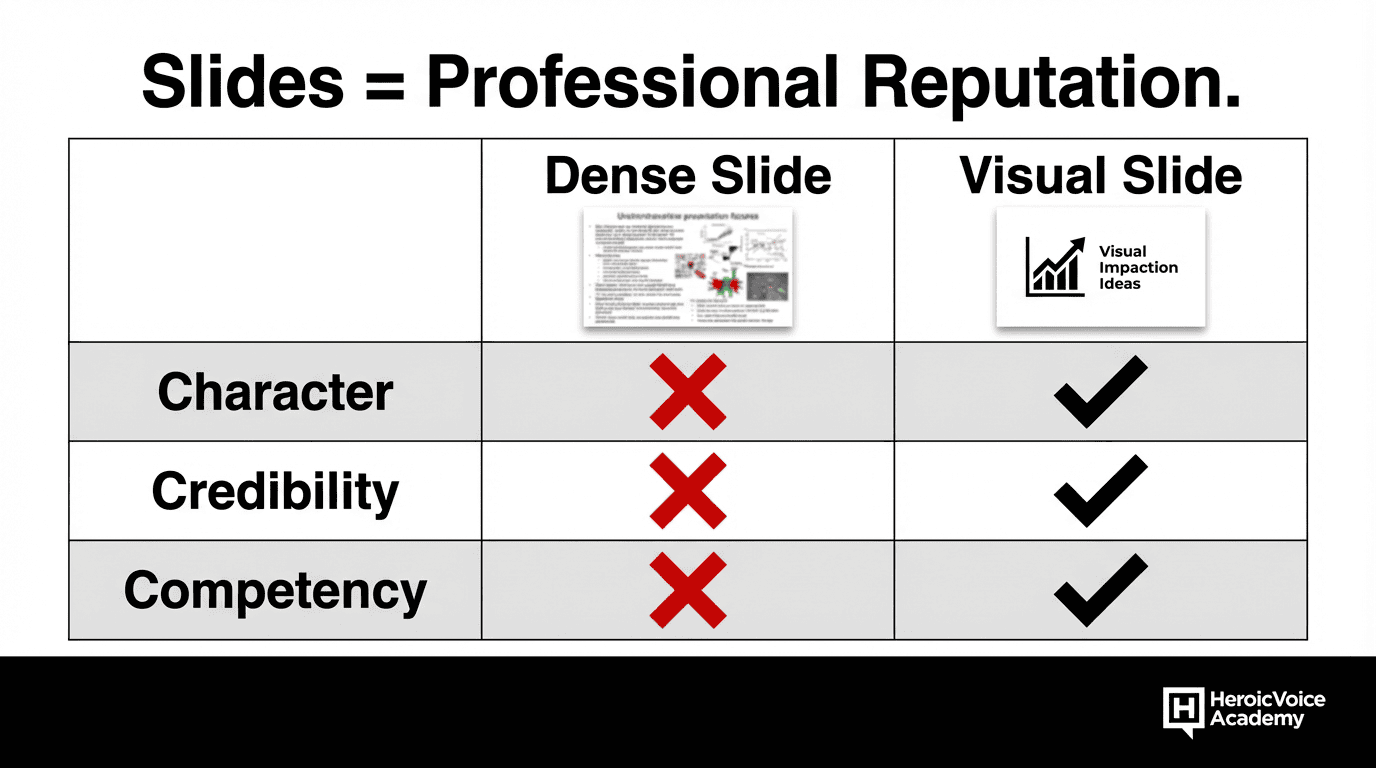
Slides Define Your Reputation
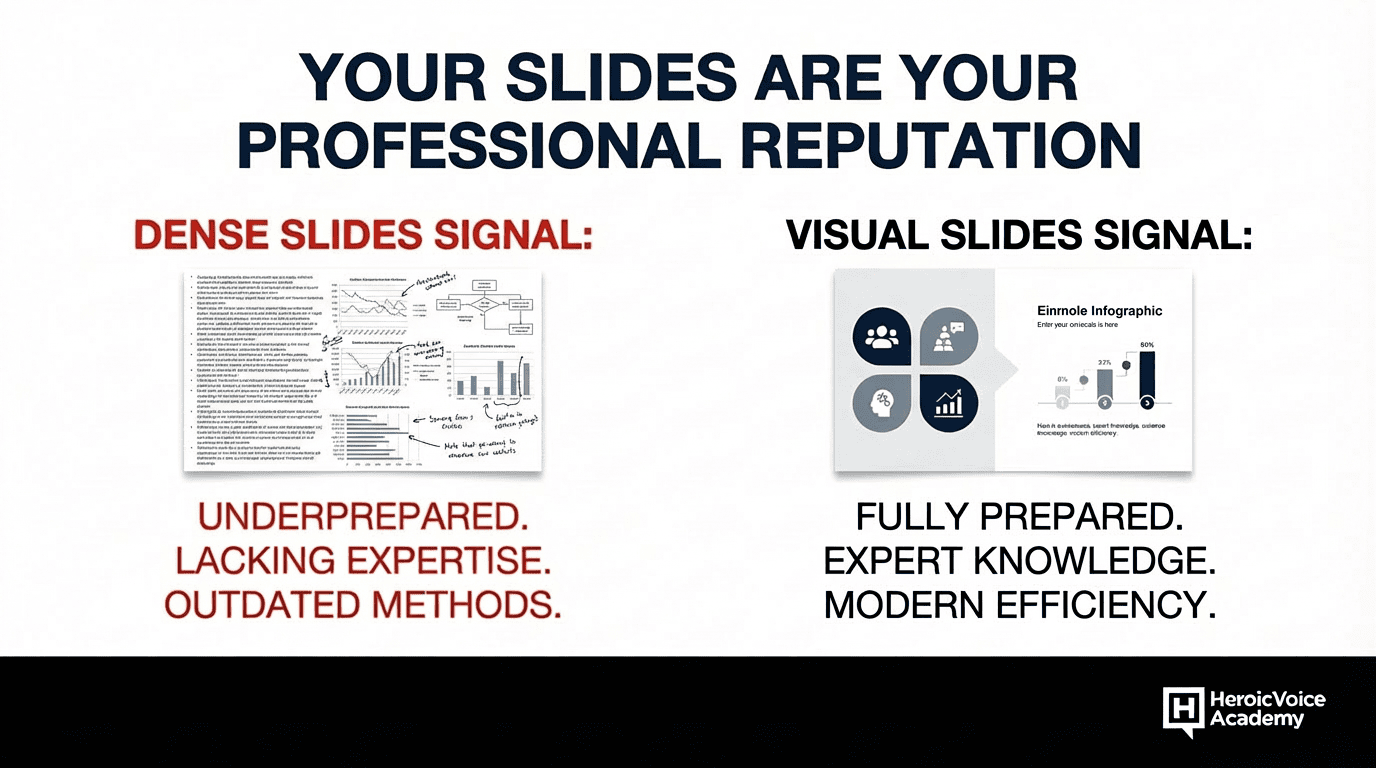
The Stakes
- Underprepared speaker who maximized content instead of comprehension
- Lacking Expertise: Insufficient command of the material
- Outdated Methods: Unaware of modern tools to high-impact visuals in seconds
- Fully Prepared: To deliver an outstanding audience experience
- Expert Level Knowledge: Able to deliver essentials to any audience
- Modern Efficiency: Leveraging AI tools to create trust, connection, and relationships
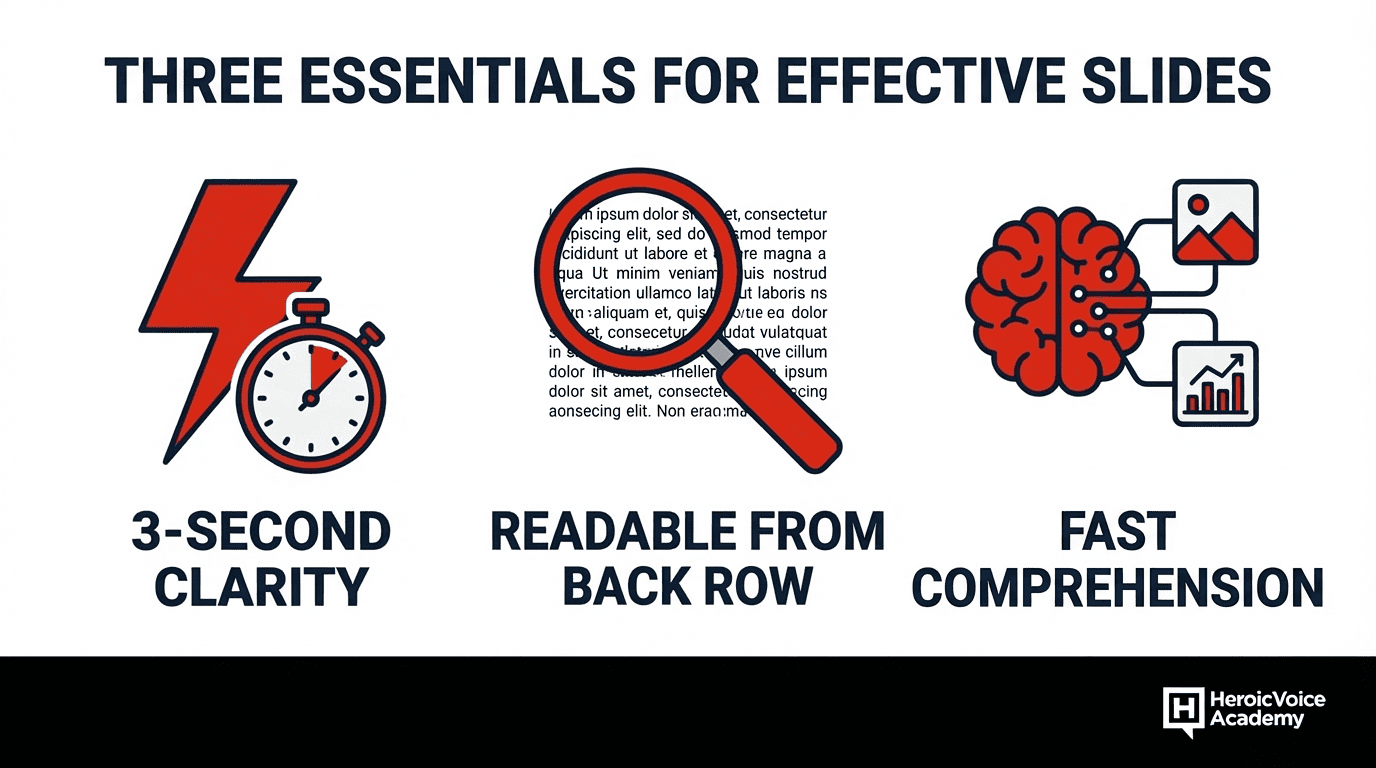
The Presentation-Ready Standard
- 3-Second Clarity: Your audience grasps the core message within three seconds. No hunting. No mental gymnastics. Immediate clarity that lets them focus on your words instead of decoding your visuals.
- Large Fonts: Readable from the 30th row. If someone in the back can't read your text comfortably, your slide has failed half your audience before you've spoken a word.
- Fast Comprehension: Icons, images, graphics. The human brain processes visuals 60,000 times faster than text. Visual-first design isn't aesthetic preference—it's cognitive science.
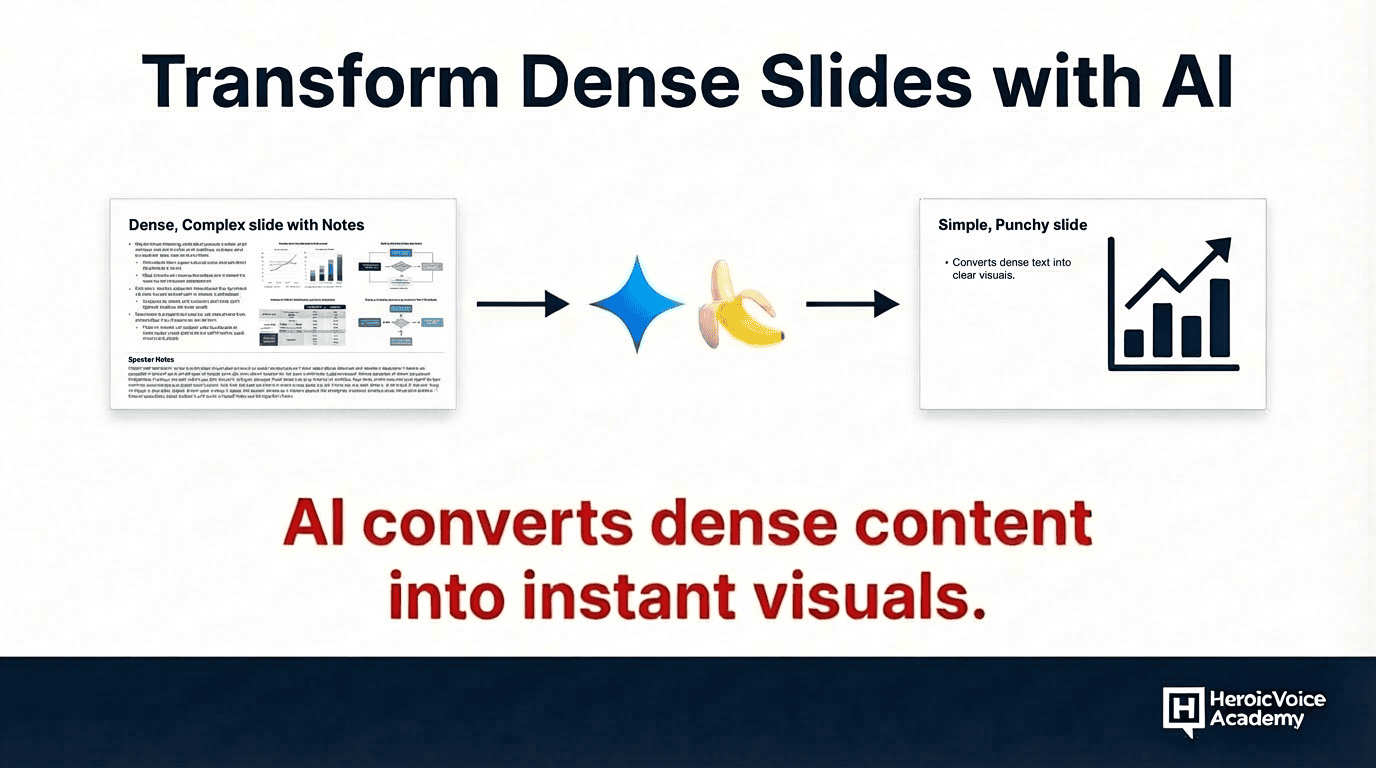
How to Build Presentation-Ready Slides
Method 1: Convert from an Existing Slide
If you already have detailed slides that need transformation, start here:
Upload your existing slide to Gemini or NanoBanana
Use this prompt: "Create a highly visual 16:9 keynote slide from the reference image. Maximum 7 word title, Maximum 20 total words. Visual-first, 3-second comprehension. Large fonts readable from the 30th row."
Review the generated slide and refine as needed
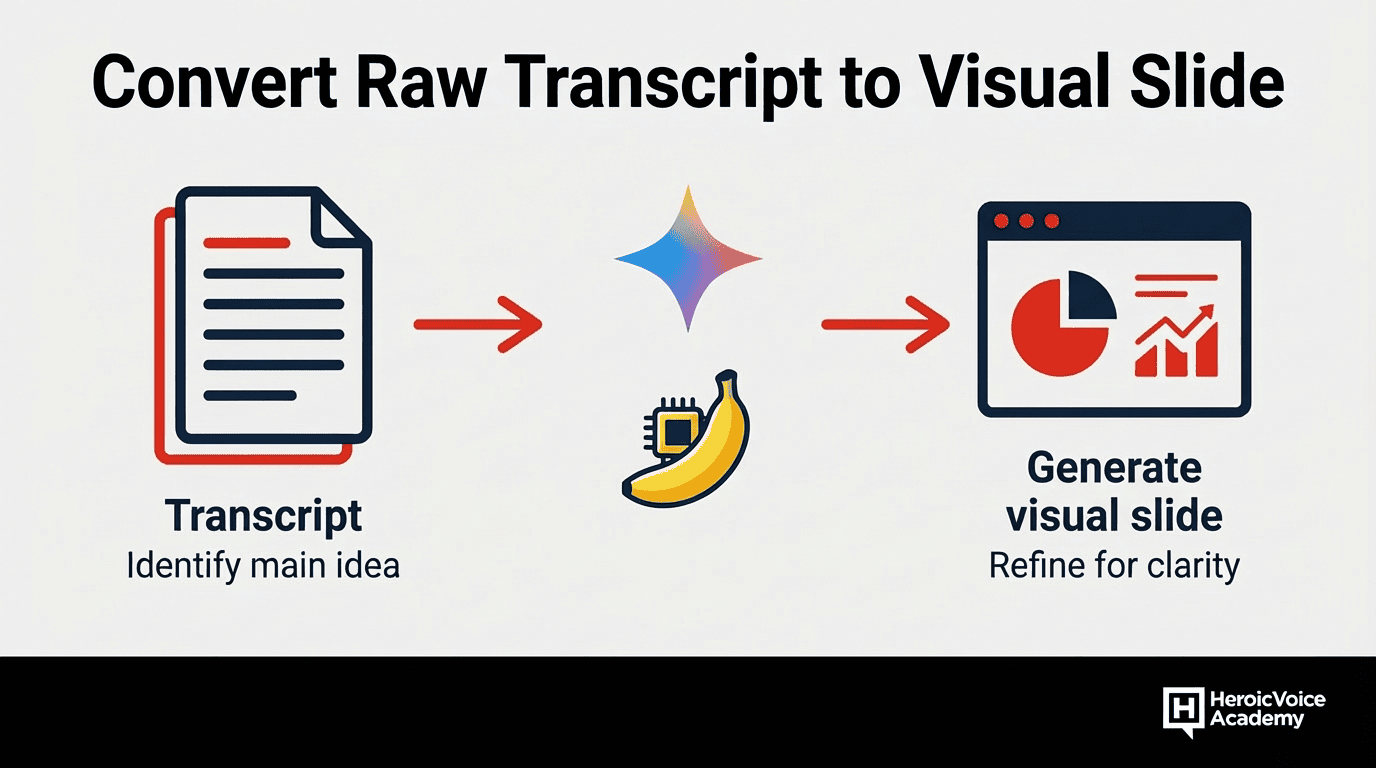
Method 2: Convert from a Transcript
If you're building slides from scratch or working from speaker notes, this approach lets you transform raw content directly:
Identify a main idea or concept from your presentation transcript
Use this prompt: "Create a highly visual 16:9 keynote slide that represents the following text. Maximum 7 word title, Maximum 20 total words. Visual-first, 3-second comprehension. Large fonts readable from the 30th row."
Add your transcript section below the prompt
Generate and refine the resulting slide
The Transformation in Action
The difference is dramatic. A slide crammed with fifteen bullet points explaining quarterly results becomes a single compelling statistic with an upward arrow. A complex process diagram with tiny labels transforms into three large icons with minimal text. Your audience stops working to understand and starts absorbing your message effortlessly. The Outcome
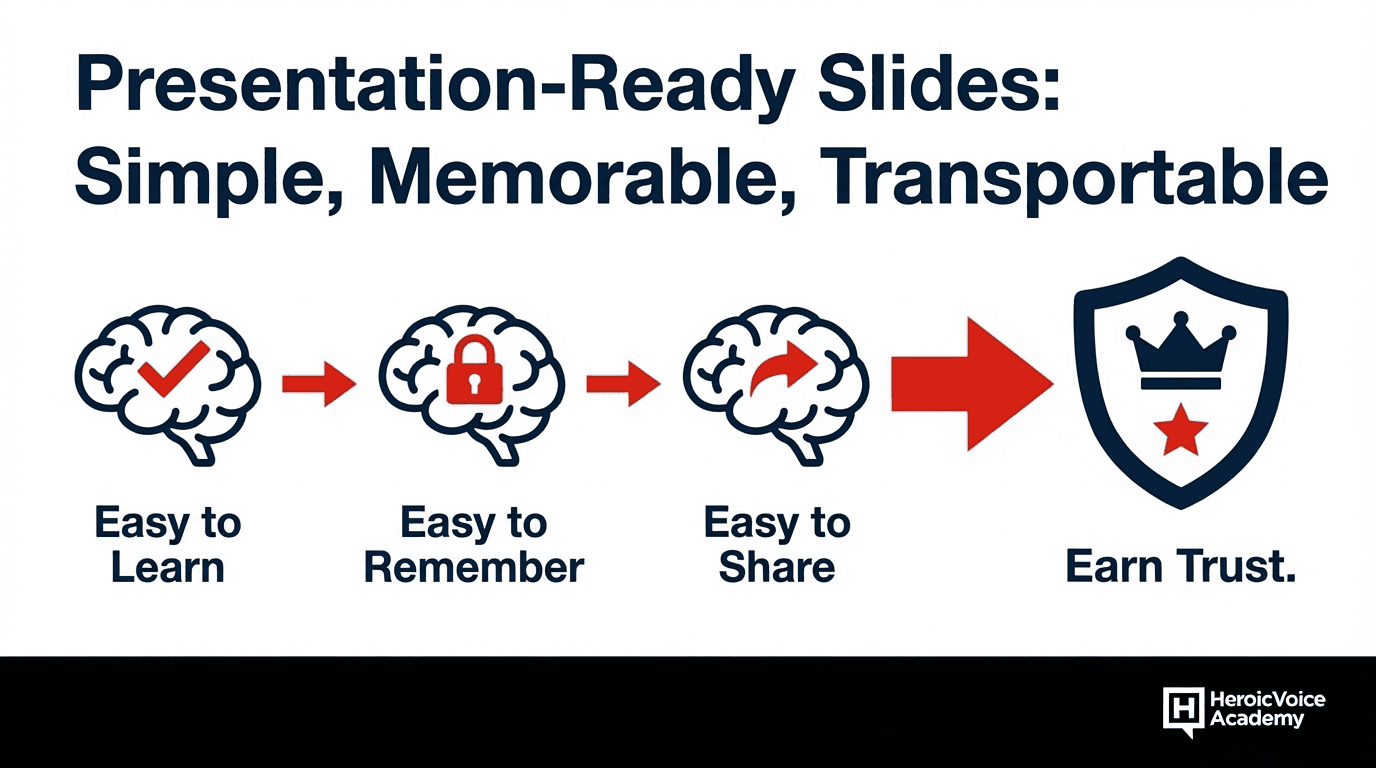
digestible, visual formats, three things happen:
* Audiences learn your message in 3 seconds (Simple)
* Audiences remember your core messages (Memorable)
* Audiences share your core messages (Transportable)
Bottom Line: Audiences trust your voice, recognize your authority and respect your
leadership. That's the power of presentation-ready slides.
About The Heroic Voice Academy
The Heroic Voice Academy is the defining Synchronized Communications Platform, helping senior executives and leadership teams turn high-stakes presentations into repeatable ROI through aligned messaging, precision practice, and world-class delivery skills.
Learn more: Read our Articles
Build Your SCP: Take the Scorecard - Get your Personalized Roadmap
Join the Waitlist: Big Stage Playbook (available 2026)